 AR
AR
What Is an Automatic Particle Board Production Line? A Complete Guide to Modern Panel Manufacturing
2026/07/10
Discover the essentials of automatic particle board production lines and modern panel manufacturing techniques.

2026/07/20
A hot press machine is one of the most important pieces of equipment in the wood-based panel industry. It is widely used in the production of plywood, LVL (Laminated Veneer Lumber), particle board, MDF, HDF, OSB, decorative panels, and other engineered wood products.
By applying controlled heat and pressure, a hot press machine bonds multiple layers of wood veneer or wood-based materials together with adhesive, creating strong, durable, and dimensionally stable panels.
In modern wood panel manufacturing, the hot press machine plays a key role in determining product quality, production efficiency, and overall manufacturing performance. The pressing process directly affects bonding strength, panel thickness accuracy, surface quality, and long-term durability.
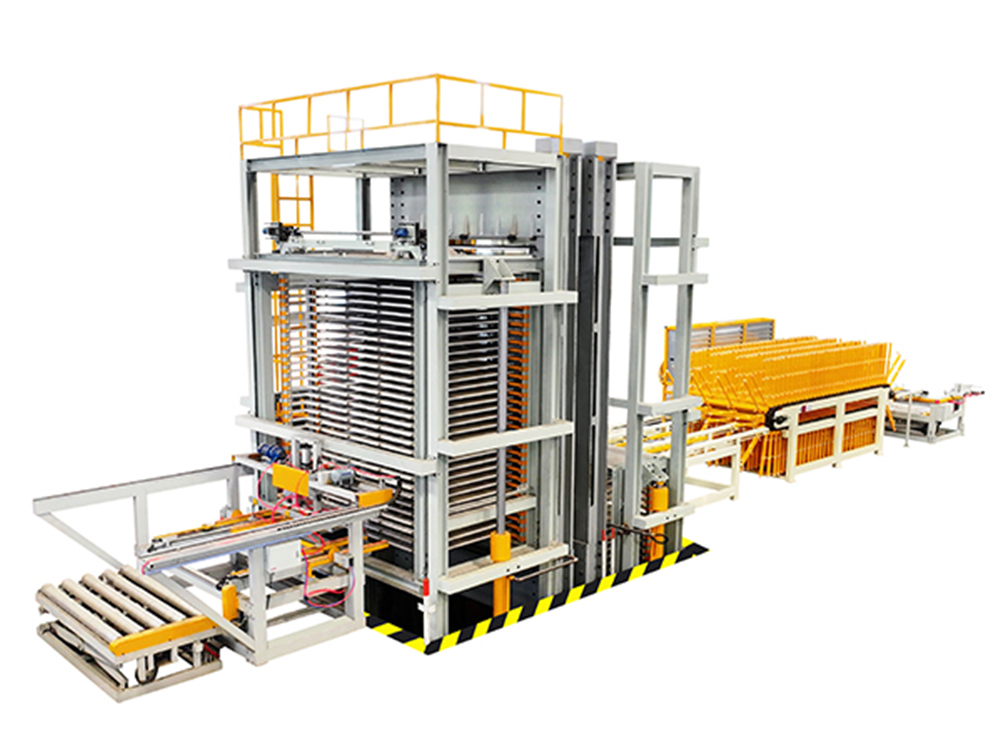
During plywood and wood panel production, veneers or material mats coated with adhesive are first assembled into a panel structure. However, the adhesive cannot fully cure without proper temperature and pressure.
A hot press machine provides the required heat, pressure, and pressing time to complete the bonding process. Proper pressing conditions ensure strong adhesion between layers and prevent common problems such as delamination, deformation, weak bonding, and uneven thickness.
For plywood production, hot pressing is especially important because multiple veneer layers must be permanently bonded while maintaining excellent strength and dimensional stability.
The pressing parameters, including temperature, pressure, and time, must be adjusted according to the wood species, adhesive type, panel thickness, and product requirements.
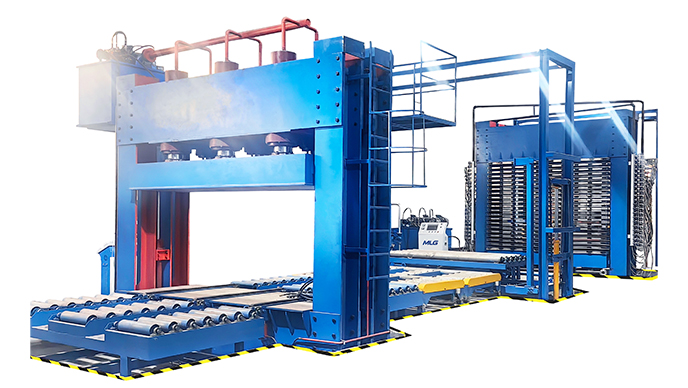
A hot press machine mainly consists of a hydraulic system, heating system, pressing plates, control system, and loading/unloading mechanism.
The working process includes:
1. Panel Loading
The assembled veneer stacks or wood materials are placed between heated press plates. Automatic loading systems can improve production efficiency and reduce manual labor.
2. Pressure Application
The hydraulic system applies high pressure to compress the materials evenly and ensure proper bonding.
3. Heating and Curing
Heat transfers through the press plates, allowing the adhesive to cure and create a strong connection between layers.
4. Press Release
After the required pressing time, the finished panels are removed and transferred to the next production process.
A stable pressing process is essential for achieving consistent panel quality in large-scale manufacturing.
Different wood products require different hot press configurations.
Used for manufacturing plywood, film-faced plywood, and other veneer-based panels. These machines provide high pressure and uniform heating to achieve strong bonding between veneer layers.
Designed for producing structural laminated veneer lumber. LVL presses require higher bonding performance and are widely used in construction and industrial applications.
Mainly used for decorative surface lamination, such as applying melamine paper onto MDF, particle board, plywood, and other substrates.
Designed for large-scale industrial panel production, featuring high pressure capacity and advanced automation systems.
Used for molded door panel production, combining shaping and adhesive curing processes.
Different hot press machines can be customized according to production capacity, panel size, pressure requirements, and factory conditions.
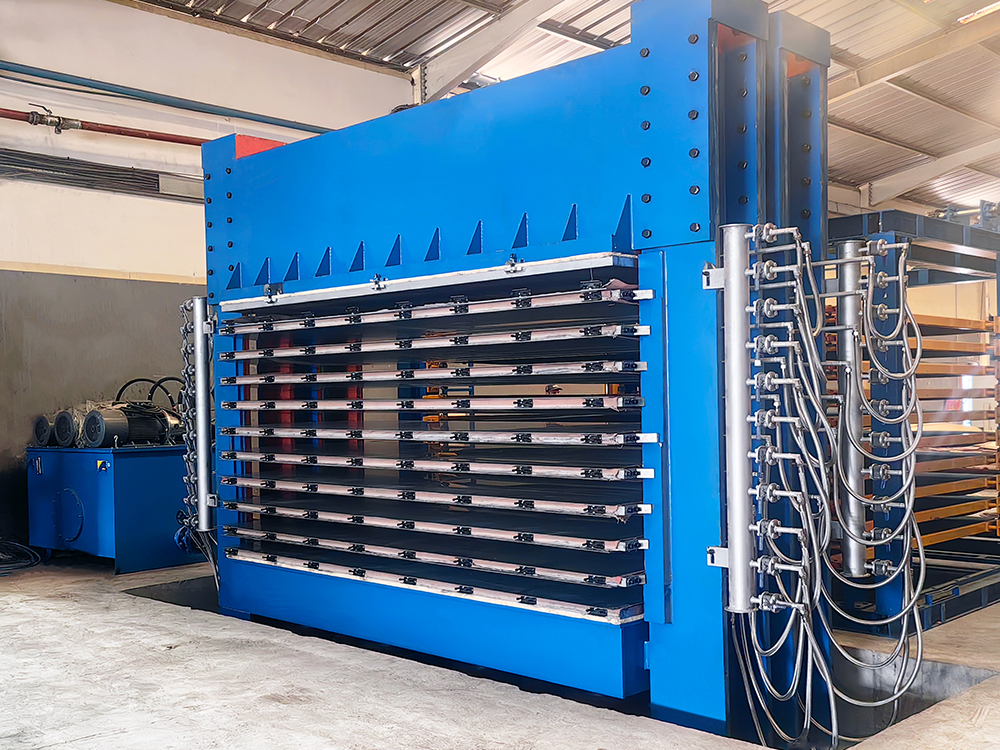
With the development of automation technology, modern hot press machines have become more efficient, accurate, and reliable.
Typical features include:
These technologies help manufacturers reduce labor costs, improve production efficiency, and maintain consistent product quality.
Product Type
Different products such as plywood, LVL, MDF, and particle board require different pressing conditions.
Production Capacity
The machine configuration should match daily production requirements.
Panel Size and Thickness
The pressing area and pressure capacity must meet product specifications.
Heating Method
Common heating methods include steam heating, thermal oil heating, and electric heating.
Automation Level
Automatic systems can improve efficiency for high-volume production.
A customized hot press solution provides the best balance between investment cost, production efficiency, and long-term reliability.
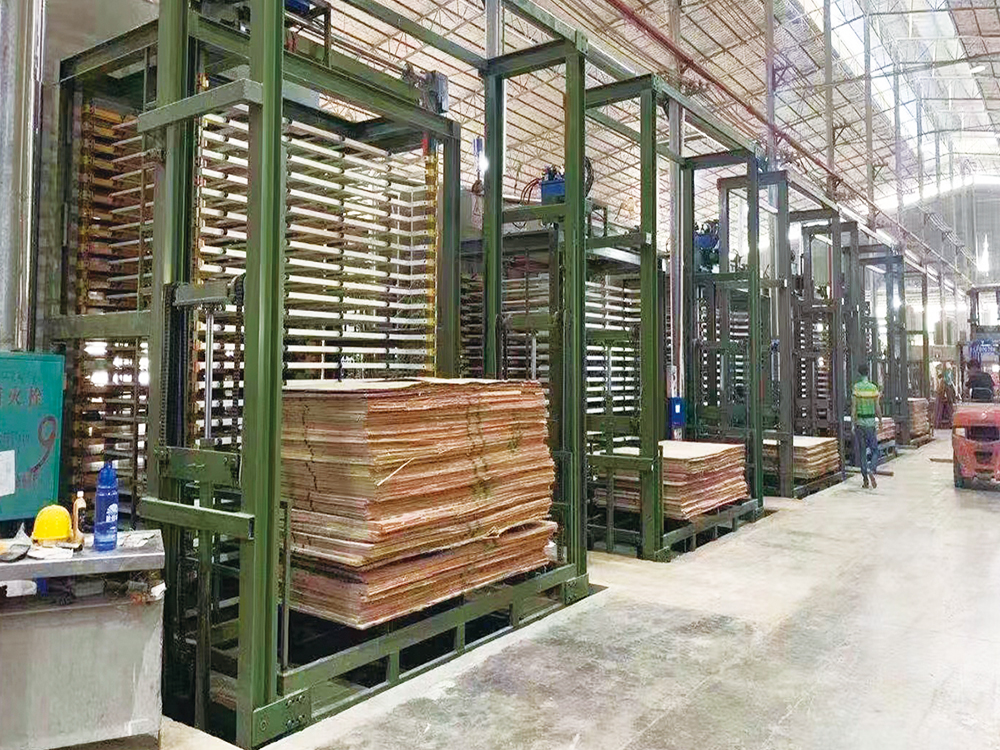
As demand for engineered wood products continues to grow, manufacturers are focusing more on automation, energy efficiency, and intelligent production.
Future hot press machines will continue to develop toward:
·Smarter control systems
·Lower energy consumption
·Higher automation levels
·Predictive maintenance
·Improved production efficiency
Advanced hot press technology helps manufacturers improve product quality while reducing operating costs and supporting sustainable production.
A hot press machine is the core equipment of many wood panel production lines. By precisely controlling temperature, pressure, and pressing time, it transforms loose veneer assemblies and wood-based materials into strong, stable, and high-quality panels.
Whether producing plywood, LVL, MDF, OSB, or decorative panels, selecting the right hot press machine is essential for achieving reliable production and consistent product performance.
With continuous improvements in automation and intelligent manufacturing, hot press machines will continue to play an important role in the future development of the global wood processing industry.
2026/07/10
Discover the essentials of automatic particle board production lines and modern panel manufacturing techniques.
2026/07/01
Explore the complete manufacturing process of plywood production lines and their efficient operation.

